|
To read Tom Franklin's profile click here.
SLR:
Hi Tom. I just want to start out by telling our readers
that you live in Oxford,
Mississippi, the home of William
Faulkner, Barry Hannah,
and
John Grisham. And, well,
me, in the summer. But for those who don't know, and haven't had a
chance to read your profile, tell me where you grew up.
TF:
I was born in Dickinson,
Alabama in 1963. Moved to Mobile
in 1981.
SLR:
Where did you go to school, places you have lived?
TF:
I went to the University of South
Alabama for my Bachelors then to University of
Arkansas in Fayetteville for my
MFA. Got that in 1998. I’ve had a lot of odd jobs. A lot of odd
jobs! After getting my MFA, I did go back to Alabama though and
taught at my alma mater.
SLR:
For those who
haven’t yet read Hell at the Breech it is based on a real-life feud
in the 1890s that pitted the underclass-poor, mostly white
sharecroppers-of Clarke County, Ala., against the land-owning gentry
who could and did control their fate. But that simple summary does
not do justice to the complex and incredibly violent things that
went on in the community. What made you want to write this story?
And did you have a clear idea of how you would fuse fact and fiction
in this overall fictitious account of real events before you started
writing?
TF:
I talked to people and decided for myself what to believe and what
not to believe. Few things about the actual event are really known
and since criminals are more interesting than good people, I decided
to believe the things that made the criminals better characters.
There are some facts that I changed for the sake of the story. For
instance, I knew that in real life the sheriff was young, but in his
novel, it worked better to have the sheriff as an older man.
SLR:
You’ve been commended by critics and
readers for your depiction of life in rural Alabama in the 1890’s.
Of course, critics and readers could not know exactly what it was
like, and neither could you since it was so long ago. But you’ve
managed to make natives of Alabama feel you did it right? What did
you do to prepare for this? Where did you go for research and how
did you know when you were getting it right and when you weren’t. I
assume it mattered to you.
TF:
When I researched the novel I talked to the local experts who wrote
Mitchem War of Clarke County, Alabama. It was a great resource for
me. The main resource in fact. I also used information from the
Clarke County Democrat, old newspapers, I read books about the
reconstruction –the South in general, James Agee, Let’s Now Praise
Men, pictures helped a lot too. Pictures helped a whole lot. Most
of all, perhaps, was the Sear Catalogue of 1897. I used it for
details of clothes, firearms, ladies undergarments. I still made
some things up but I tried to get most of it right. I even moved the
story to 1898 because of the catalogue. That’s how much I used it.
The actual event which inspired the story happened in 1893.
SLR:
When you
write do you have the story outlined completely in our head or does
it unfold as you write? Is there a point when the characters take
off on their own and you can’t easily predict what they will do
next?
TF:
When it's going best the characters start acting on their own. One
reason I'm so hooked on writing is the possibility that anything can
happen, you're telling a story no one's ever told and the story is
actually unfolding before your eyes. You're watching it happen (and
making it happen, the way, in those dreams you have where you're a
participant but can also kind of control the action). The
characters stop being characters and start acting like
people--petulant, bitchy, dangerous, lovely. All the things people
are.
Sure, there are times when I've known where a story is going, but
even then there are surprises. What's the old line: If the writer
wasn't surprised, how can the reader be? My best example is my
story "Blue Horses" from Poachers. This is a story where two
mill-workers are delivering a gun to their friend who has a brain
tumor so he can commit suicide. I knew where the two workers were
going and I knew what they were going to do, knew they'd leave the
gun with the sick guy and then go to work. What I didn't expect was
a long inner-monologue from the point-of-view guy, a thing that
opened the story up completely. It's the story's best paragraph and
it's the one I didn't have any control over, didn't plan or expect.
Just boom, there it was. That's how it's best for me, I'm in there
working and something like that happens. Not in my head, not in my
fingers typing, but some magic place between.
But
it's different with every story, novel, chapter, essay. Each one is
its own adventure, its own possibility of failure or success.
SLR:
You just finished a novel titled
Smonk. It comes out in 2006 if I recall. Can you tell our
readers anything about that?
TF:
Smonk's a southern, not a western. It's set in 1911
southwestern Alabama. It's incredibly violent. It's dirty,
raunchy. I hope it's funny. But it ends up being a horror novel.
Which absolutely floored me when I finally understood that. I'd
begun it as a kind of Southern parody but the characters kept doing
things that seemed less like parody and more like desperate acts.
Then--one good night several months back, after a complete first
draft and a lot of added work on it--I realized what the novel was
really about. And I was delighted. Somehow, this ultra-weird
story--it involves rabies and a town full of widows and a half-wild
man named Smonk and a fifteen-year-old whore who has no idea who she
is and a troop of Christian deputies with a prissy leader, etc
etc--somehow this ultra-weird story, which I'd never thought of,
fought its way out of my subconscious. I have no idea where it came
from. And that's why I like it.
SLR:
What’s next? Will you stay in the South?
TF: I
do think I'll stay with the South simply because it's what I know,
it's where I know. It's the people I know. Not that I won't move
my southerners up north if the story takes them there, or out west
or down below the border, etc. But I think my characters will
always be Southern. One thing I'm interested in is reinventing
"Southern" writing. Somebody called the stories in Poachers
"industrial gothic" and I liked that. But I can't stay there. I
want to constantly move. The novel I'm finishing now is very, very,
very different from anything I've done before. It's definitely
"Southern" but it's (I hope) a new twist on the themes. I hope the
characters are new and fresh, too. The language. That's the word:
I think I can stay Southern if I can keep it fresh. The novel I
want to do next will be a Southern crime novel, I think. Crystal
meth.
SLR:
Who do you like to read now? Are you reading anything now that
you’d like to recommend?
TF:
I'm teaching a class on the contemporary literary American western,
so I've just reread True Grit, which is one of the top five
books I've ever read. It's amazing. A tour de force. Next I'm
rereading Blood Meridian and then Deadwood, by Pete Dexter.
I read some dime novels before that, and a book about Buffalo Bill's
Wild West. Before that Cormac McCarthy's new one No Country for Old
Men. I'm very excited about a collection that's coming out soon,
The Mysterious Secret of the Valuable Treasure, by Jack Pendarvis.
This is the funniest book I've ever read, period. I love it.
|

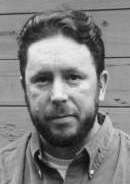
(Photo: Maude Schuyler Clay)
SLR Recommends
|